
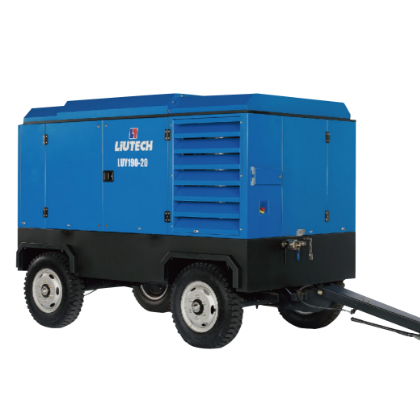
Product display





The core decision between selecting a permanent magnet variable frequency air compressor or a mains frequency air compressor lies in the fluctuation of on-site air consumption, operation duration, and energy-saving requirements. The two differ significantly in terms of working principle, energy consumption, applicable scenarios, and operation and maintenance costs. Blindly selecting one type can lead to energy waste or unstable air supply. It is necessary to accurately match the actual working conditions, rather than solely relying on the equipment price.
First, let's clarify the core principle differences. Industrial frequency air compressors use fixed-frequency motors with a fixed rotational speed, adjusting air supply through loading and unloading. When the air consumption is low, the equipment runs at no load, but the motor still consumes electricity at full power, with no-load losses accounting for up to 30%-50%. It is suitable for conditions with stable air consumption and 24-hour continuous full-load operation, such as large assembly lines and factories with uninterrupted production. Its advantages include simple structure, low procurement costs, convenient maintenance, low technical requirements for operation and maintenance personnel, and adaptability to scenarios with single operating conditions and no fluctuations in air consumption.
The permanent magnet variable frequency air compressor, equipped with a permanent magnet synchronous motor and a variable frequency control system, can adjust the motor speed in real-time according to the air consumption, providing air supply on demand and completely avoiding no-load loss. Its energy-saving effect is extremely prominent. Compared to the mains frequency machine, it achieves an average energy-saving rate of 20%-40%. It is particularly suitable for working conditions with large fluctuations in air consumption, intermittent air usage, and low-load operation at night, such as small and medium-sized processing factories, auto repair shops, and multi-shift production enterprises. The variable frequency start-up has no current impact, is friendly to the power grid, ensures smoother equipment operation, reduces noise, minimizes wear on the main unit, and prolongs its service life.
Key criteria for model selection: If the enterprise operates for 8 hours per day with minimal gas consumption fluctuations and a limited budget, a standard frequency air compressor may be chosen. If the operation duration exceeds 12 hours, gas consumption fluctuates significantly, and long-term energy-saving benefits are pursued, a permanent magnet variable frequency air compressor should be preferred. Although the procurement cost is 15%-30% higher, the return on investment can be achieved through electricity cost differences within 1-2 years, and the long-term cost-effectiveness is higher. Additionally, model selection should match the rated exhaust volume and pressure to avoid over-sizing or under-sizing, and choose a reputable brand of permanent magnet motor to ensure the stability of the variable frequency system. Regular maintenance should be carried out in the later stages to maintain energy-saving efficiency. Overall, in most industrial scenarios, the practicality and economy of permanent magnet variable frequency air compressors far surpass those of standard frequency compressors.
Contact:Mr Zhu Mobile:+86-15961777912/18151552877 Phone:+86-0510-88231901
Address:Wuxi new district spinning city road no. 288 C31 microcomputer
 Scan! To view more
苏公网安备 32021402002180号